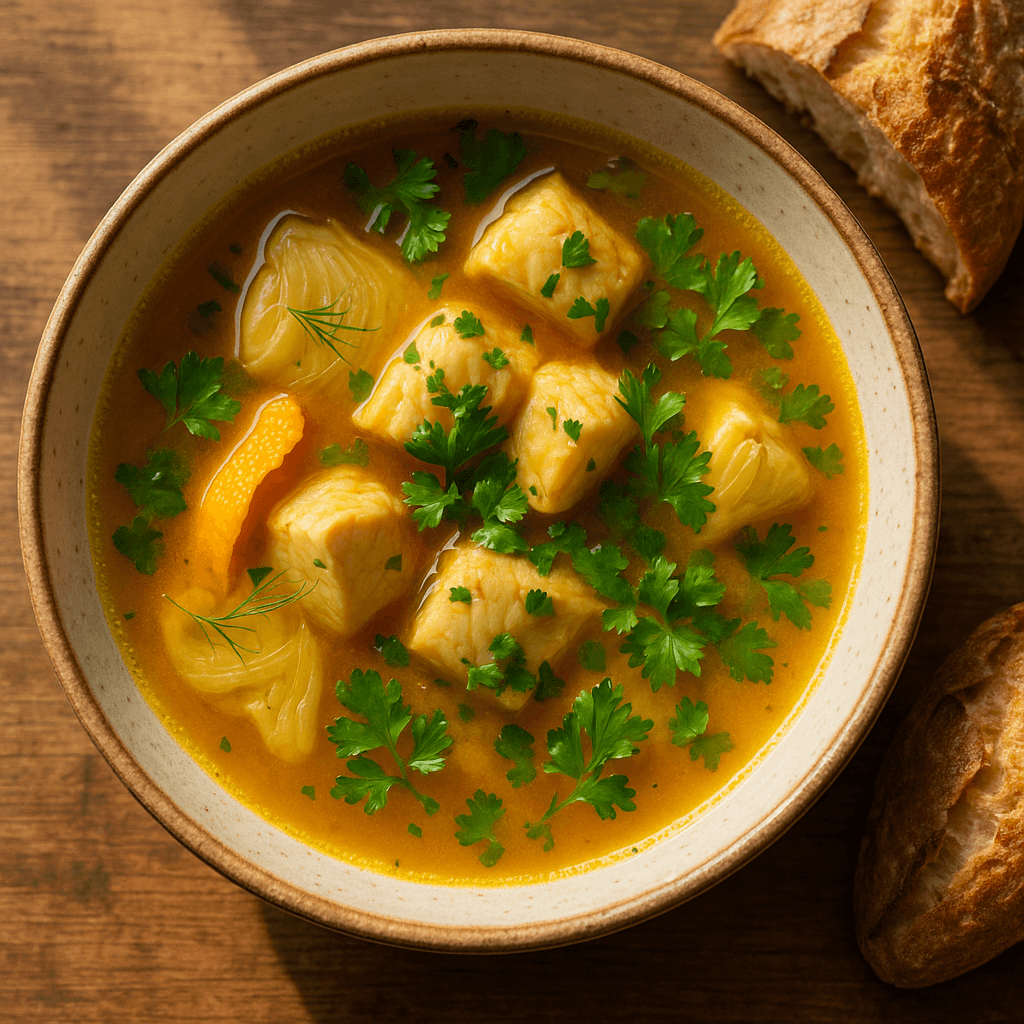
Fish Soup Recipe – A Guide to the World's Greatest Fish Soups
Quick Answer
Fish soup combines fish or seafood with vegetables in a flavored broth. This Mediterranean-style recipe sautés onion, fennel, and garlic in olive oil, adds canned tomatoes, fish stock, white wine, and a pinch of saffron, then poaches firm white fish (cod, halibut, or snapper) for 8-10 minutes. Finished with a squeeze of lemon and fresh parsley. Serves 6 in 40 minutes.
By Sarah Mitchell • June 15, 2026
Fish soup is a food made by combining fish or seafood with vegetables and stock, juice, water, or another liquid. Hot soups are additionally characterized by boiling solid ingredients in liquids in a pot until the flavors are extracted, forming a broth. One of the oldest prepared foods in human history, fish soups appear in virtually every coastal and riverine culture around the world — from the bouillabaisse of Provence to the tom yum of Thailand, from Japanese dashi-based soups to the chowders of New England.
## Classification
Fish soups are traditionally classified into two main groups: clear soups and thick soups. The established French classifications of clear soups are bouillon and consommé. Thick soups are classified depending upon the type of thickening agent used: bisques are made from puréed shellfish or vegetables thickened with cream; cream soups may be thickened with béchamel sauce; and veloutés are thickened with eggs, butter, and cream. Other thickening agents commonly used in fish soups include roux, rice, lentils, flour, and grains.
## Regional Traditions
**Bouillabaisse (France):** The iconic Provençal fish stew from Marseille, traditionally made with at least three types of Mediterranean fish (rascasse, sea robin, European conger) simmered in a broth of tomatoes, saffron, fennel, orange peel, and garlic. Served with rouille (a spicy garlic mayonnaise) and crusty bread.
**Cioppino (Italian-American):** Born in San Francisco's North Beach neighborhood, cioppino combines whatever the fishing boats brought in — typically Dungeness crab, clams, shrimp, mussels, and firm white fish — in a robust tomato-wine broth seasoned with garlic and herbs.
**Cullen Skink (Scotland):** A thick, creamy soup from the town of Cullen on the Moray Firth coast, made with smoked haddock (finnan haddie), potatoes, and onions. Often considered Scotland's national soup.
**Ukha (Russia):** A traditional Russian clear fish soup considered one of the oldest dishes in Russian cuisine. Made from freshwater fish (perch, pike-perch, or trout) with root vegetables, flavored with dill, parsley, and black pepper. The broth is kept deliberately clear.
**Psarosoupa (Greece):** A Greek fish soup using a traditional oil-and-lemon sauce (avgolemono or ladolemono), with vegetables, rice, and sea fish. A staple of Greek island cooking.
**Waterzooi (Belgium):** Originally a freshwater fish stew from Ghent, now more commonly made with chicken. The fish version uses a cream-enriched broth with carrots, leeks, celery, and potatoes.
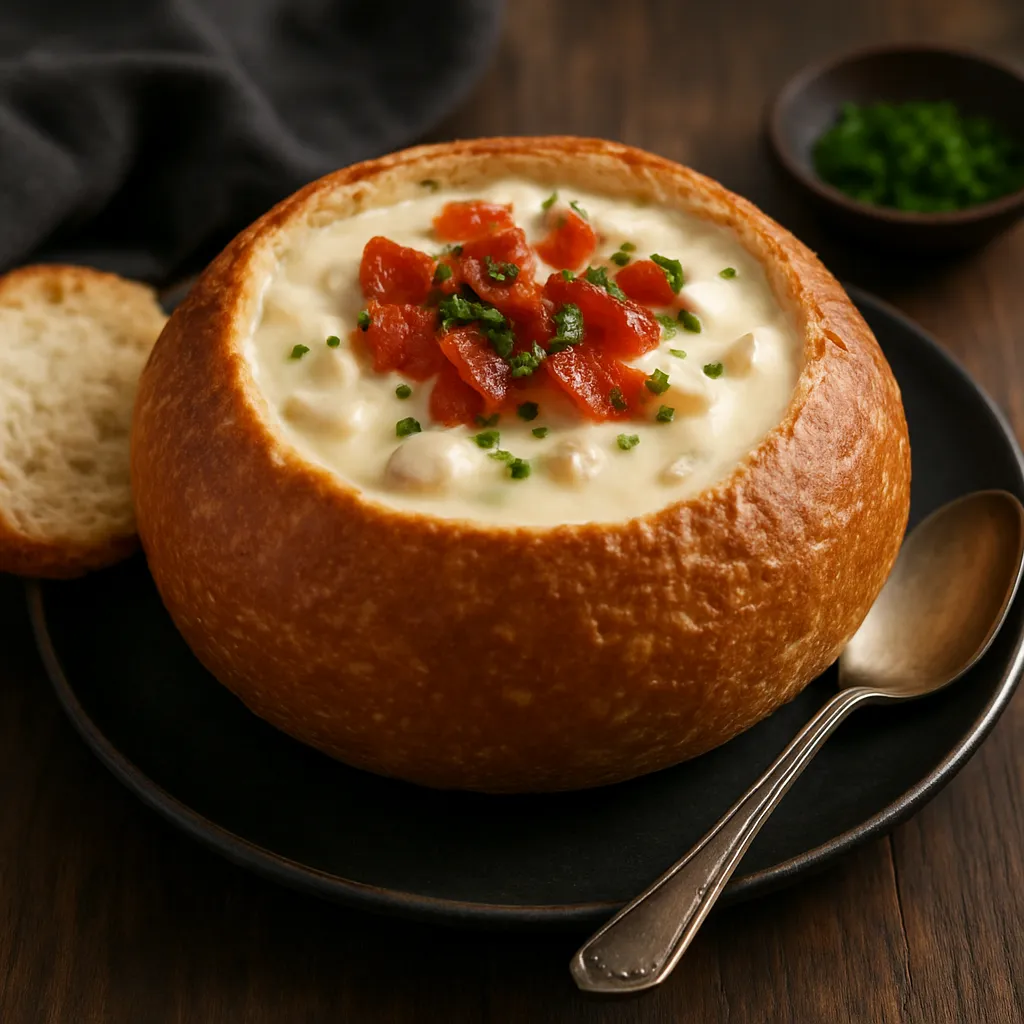
**New England Clam Chowder (USA):** A cream-based chowder traditionally made with quahog clams, potatoes, salt pork, onion, and milk or cream. A staple of New England cuisine since the 18th century.
## This Recipe
The recipe below is a versatile Mediterranean-style fish soup that draws on the French tradition of soupe de poisson — a puréed, saffron-scented soup that serves as the foundation for many regional variations. It works with any firm white fish (cod, halibut, snapper, sea bass) and can be adapted with shellfish. The technique of building a saffron-tomato base, then gently poaching the fish in it, produces a soup that is both deeply flavored and elegantly simple.
About This Recipe
"Fish Soup Recipe – A Guide to the World's Greatest Fish Soups" is a Soups & Stews recipe that brings firm white fish fillets (cod, halibut, snapper, or sea bass), cut into 2-inch chunks, extra-virgin olive oil, large onion, finely diced, fennel bulb, cored and thinly sliced (fronds reserved for garnish) and garlic, minced together into a flavorful, well-balanced dish. Rated Medium and ready in about 45 minutes, this recipe fits easily into a busy schedule. It serves 6 and works equally well for a weeknight dinner or a relaxed weekend meal. The French inspiration behind this dish balances classic techniques with clean, vibrant flavors.
Ingredients
- 1.5 lbs firm white fish fillets (cod, halibut, snapper, or sea bass), cut into 2-inch chunks
- 3 tbsp extra-virgin olive oil
- 1 large onion, finely diced
- 1 fennel bulb, cored and thinly sliced (fronds reserved for garnish)
- 4 cloves garlic, minced
- 1 can (14 oz) crushed tomatoes (San Marzano preferred)
- 4 cups fish stock or clam juice
- 1/2 cup dry white wine (Sauvignon Blanc or Pinot Grigio)
- 1 pinch saffron threads (about 1/4 tsp), steeped in 2 tbsp warm water
- 1 bay leaf
- 1 strip orange peel (2-inch piece, no white pith)
- 1/4 tsp red pepper flakes
- salt and freshly ground black pepper to taste
- 2 tbsp fresh lemon juice
- 2 tbsp fresh flat-leaf parsley, chopped
- crusty bread, for serving
Instructions
- 1
Steep the saffron threads in 2 tablespoons of warm water and set aside for at least 10 minutes. This blooms the saffron and releases its color and flavor.
- 2
Heat olive oil in a large Dutch oven or heavy-bottomed pot over medium heat. Add the diced onion and sliced fennel. Cook, stirring occasionally, for 6-8 minutes until softened and translucent.
- 3
Add the garlic and red pepper flakes. Cook for 1 minute until fragrant, stirring constantly so the garlic doesn't burn.
- 4
Pour in the crushed tomatoes and cook for 3-4 minutes, stirring, until the tomatoes darken slightly and begin to concentrate.
- 5
Add the fish stock, white wine, saffron with its soaking liquid, bay leaf, and orange peel. Bring to a boil, then reduce to a gentle simmer. Cook uncovered for 15 minutes to let the flavors meld.
- 6
Season the fish chunks with salt and pepper. Gently lower them into the simmering broth. Do not stir — the fish is delicate and will break apart. Cook for 8-10 minutes until the fish is opaque and flakes easily with a fork.
- 7
Remove the bay leaf and orange peel. Stir in the lemon juice and taste for seasoning — adjust salt, pepper, or a pinch more lemon as needed.
- 8
Ladle into warm bowls. Garnish with chopped parsley and reserved fennel fronds. Serve immediately with crusty bread for dipping into the saffron-tomato broth.
Expert Tips
For the best result, use the freshest, highest-quality ingredients you can find. Firm white fish fillets (cod, halibut, snapper, or sea bass), cut into 2-inch chunks is the heart of this dish, so choose it with care. Read the recipe through before you start and prep all ingredients in advance (mise en place) so the cooking process is smooth. Stovetop work especially well for this preparation. Because the recipe is gluten-free, dairy-free and pescatarian, it fits easily into balanced eating plans. Taste and adjust salt, pepper, and acid at the end to make the flavors pop.
What To Serve With This
"Fish Soup Recipe – A Guide to the World's Greatest Fish Soups" is a versatile Soups & Stews dish that pairs beautifully with a simple side salad, buttered green beans, roasted potatoes and classic French sides. Choose at least one fresh and one hearty side to create a balanced meal.
Storage & Reheating
Fish Soup Recipe – A Guide to the World's Greatest Fish Soups stores well in an airtight container in the refrigerator for 2–3 days. Let it cool to room temperature before refrigerating before sealing the container. Reheat gently until warmed through, adding a small splash of liquid if needed to restore the original texture.
Nutrition Facts (per serving)
Frequently Asked Questions
What is the best fish for fish soup?
Use firm white fish that holds its shape during cooking: cod, halibut, snapper, sea bass, monkfish, or grouper. Avoid delicate fish like sole or tilapia — they disintegrate in the broth. For a richer soup, add shellfish (mussels, clams, shrimp) in the last 5 minutes of cooking.
What is the difference between fish soup and bouillabaisse?
Bouillabaisse is a specific regional fish soup from Marseille, France, that must contain at least three types of Mediterranean fish and is traditionally served in two courses — the strained broth first with rouille and croutons, then the fish on a separate platter. Generic fish soup is more flexible in ingredients and presentation.
Can I make fish soup ahead of time?
Make the broth base (steps 1-5) up to 2 days ahead and refrigerate. When ready to serve, bring the broth to a simmer and add the fish. Do not reheat cooked fish in the soup — it will overcook and become rubbery. Freshly poached fish in pre-made broth is the best approach.
What is fish stock and can I substitute it?
Fish stock is made from fish bones, heads, and trimmings simmered with aromatics. Bottled clam juice is an excellent substitute (available in most supermarkets). In a pinch, use a light chicken broth or vegetable broth — the flavor will be different but still good. Avoid strong beef or mushroom stock.
Why does my fish soup taste bland?
Three common causes: not enough salt (fish soup needs generous seasoning), skipping the saffron (it adds both color and a distinctive earthy sweetness), or using water instead of fish stock. A squeeze of lemon juice at the end brightens all the flavors dramatically.
What are the main types of fish soup around the world?
Major traditions include bouillabaisse (France), cioppino (Italian-American), cullen skink (Scotland), ukha (Russia), psarosoupa (Greece), waterzooi (Belgium), tom yum goong (Thailand), laksa (Southeast Asia), New England clam chowder (USA), and moqueca (Brazil). Each reflects local fish, ingredients, and culinary traditions.
Reviews
No reviews yet. Be the first to review this recipe!