Quick Answer
To make elderflower syrup (Holunderblütensirup), dissolve 1 kg sugar in 1 liter boiling water, cool, then pour over 20-25 elderflower umbels with sliced lemons and 30g citric acid. Infuse 3-5 days at room temperature, strain, and bottle. For elderflower jelly (Holunderblütengelee), combine 500ml elderflower infusion with 500g Gelierzucker 2:1 and 2 tbsp lemon juice, boil 4 minutes, and pour into sterilized jars.
Founder & Editor-in-Chief
Elderflower (Holunderblüten) searches exploded 8,500% on German Pinterest — the biggest single trend. This guide covers everything from foraging to making syrup, jelly, and Hugo cocktails.
In This Article
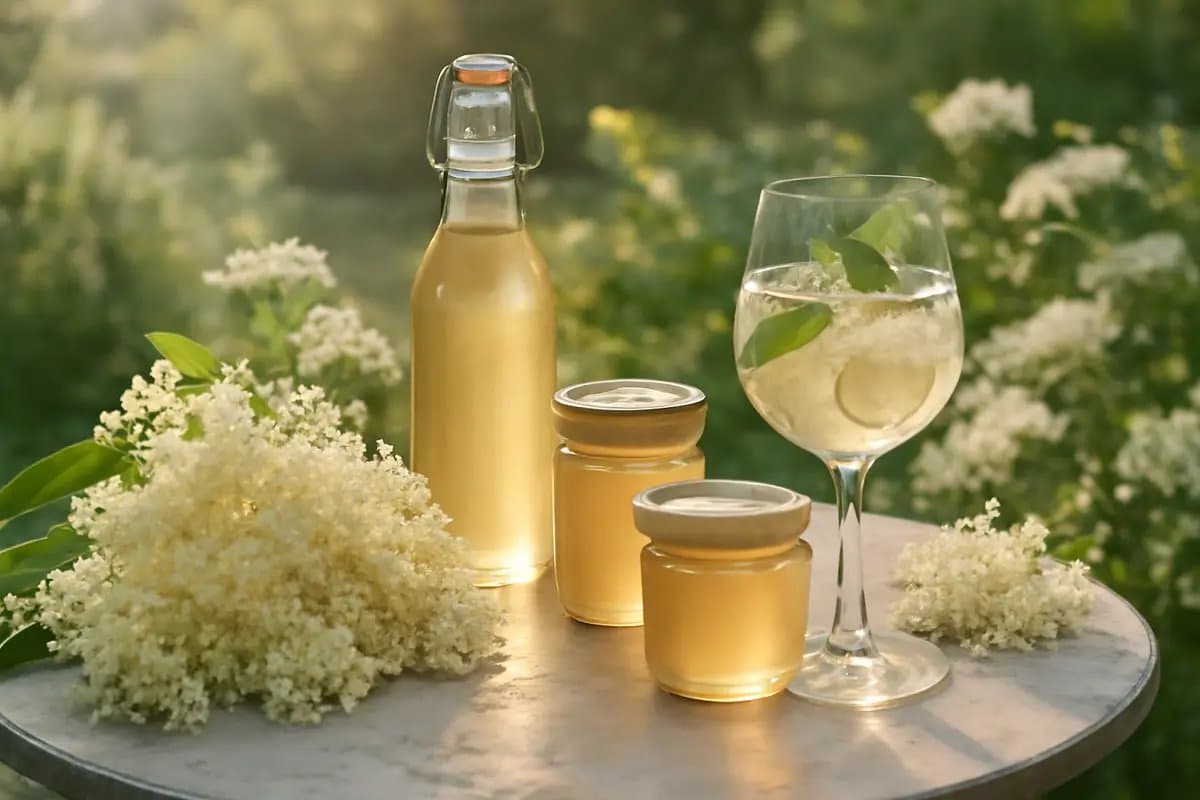
Elderflower (Holunderblüten) is the runaway star of German Pinterest in June 2026: "Holunderblütengelee Rezept" surged an astounding 8,500%, "Sirup Rezepte" climbed 200%, and elderflower-related searches dominate the German food landscape. This happens every year in late May to mid-June, when European black elder (Sambucus nigra) trees burst into bloom for just 2-3 weeks. If you miss the window, you wait a full year.
Foraging Elderflower
Elder trees grow wild across Central Europe, along roadsides, in parks, and at forest edges. In North America, they're less common but can be found in the Eastern United States and Pacific Northwest.
When to pick: Late May through mid-June, when the flower clusters (called umbels) are fully open, creamy white, and fragrant. Pick in the morning after the dew has dried but before midday heat.
What to look for: Large, flat-topped clusters of tiny white flowers with a sweet, honey-like fragrance. Avoid clusters that have started to brown or have already been visited heavily by insects.
How to harvest: Cut the entire umbel with scissors, leaving a short stem. Don't wash them — water removes the pollen that carries most of the flavor. Gently shake to dislodge any insects.
Important: Only harvest from trees you can positively identify. Black elder has flat-topped white flower clusters and opposite, compound leaves with 5-7 serrated leaflets. Do not confuse with giant hogweed or poison hemlock, both of which have white flower clusters but different leaf structures.
Elderflower Syrup (Holunderblütensirup)
The foundation recipe — once you have elderflower syrup, you can make Hugo cocktails, elderflower lemonade, drizzle it on desserts, or mix it into sparkling water.
Ingredients:
- 20-25 elderflower umbels
- 1 kg sugar
- 1 liter water
- 2 lemons, sliced
- 30g citric acid (optional, for longer shelf life)
Hugo Cocktail: Fill a wine glass with ice, add 2 cl elderflower syrup, top with Prosecco, add a splash of sparkling water, and garnish with fresh mint and a lime wedge. The quintessential German summer aperitif.
Elderflower Jelly (Holunderblütengelee)
The biggest single Pinterest trend in Germany at +8,500%.
Ingredients:
- 500 ml elderflower infusion (steep 10 umbels in 500ml water for 24 hours, then strain)
- 500g Gelierzucker 2:1 (preserving sugar with pectin — if unavailable, use 250g sugar + 1 packet liquid pectin)
- 2 tbsp lemon juice
Elderflower Lemonade
A non-alcoholic alternative to the Hugo:
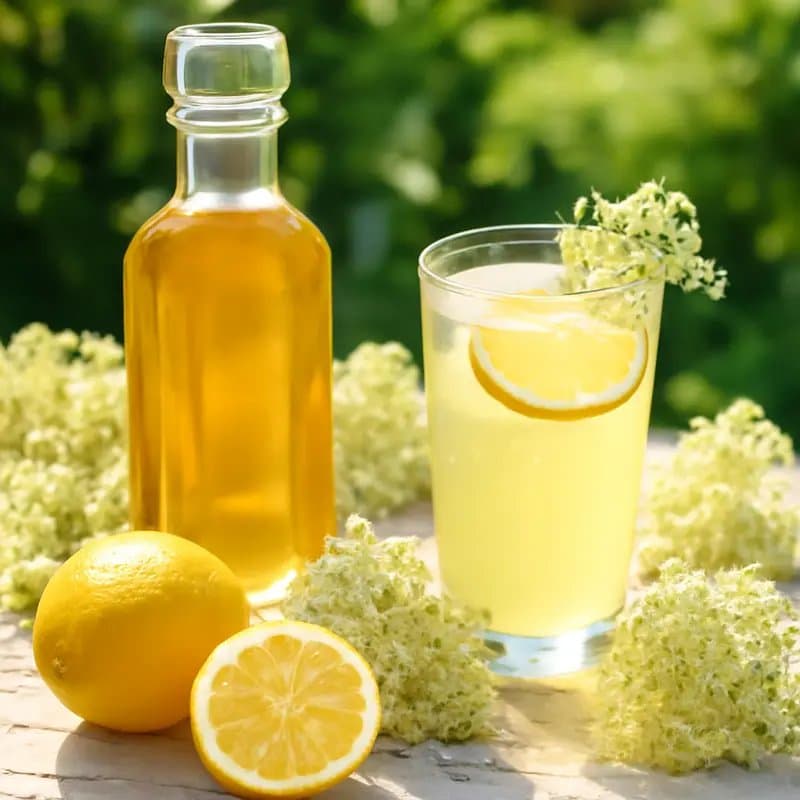
Combine 500 ml sparkling water, 3-4 tablespoons of elderflower syrup, the juice of 1 lemon, and ice. Garnish with lemon slices and fresh mint. Adjust sweetness to taste.
Elderflower Fritters (Holunderblüten-Küchlein)
A traditional Austrian and South German treat:
Make a light batter with 100g flour, 1 egg, 150ml milk, and a pinch of salt. Hold each elderflower umbel by the stem, dip into batter, and fry in hot oil (170°C) for 2-3 minutes per side until golden. Drain on paper towels and dust with powdered sugar. Serve immediately.
Timeline
- Late May: Elder trees begin blooming in warmer regions
- Early-mid June: Peak bloom across Central Europe — this is when to harvest
- Late June: Flowers begin to brown and fall; berries start forming
- August-September: Elderberries ripen (these make excellent jam and wine too)
Recipes from This Article
Try these hand-picked recipes we recommend in this article.
Save This for Later!
Pin this article to Pinterest so you can find it whenever you need it.
Save to PinterestFrequently Asked Questions
When is elderflower season?
Elderflower (Sambucus nigra) blooms from late May to mid-June in Central Europe, with peak harvest in the first two weeks of June. The window is narrow — only 2-3 weeks. In the UK, the season starts slightly later (early to mid-June). In North America, native elderflower species bloom in June-July.
How do you identify elderflower safely?
Black elder has flat-topped clusters (umbels) of tiny creamy-white flowers with a sweet honey fragrance, on green stems. Leaves are opposite and compound with 5-7 serrated leaflets. Do not confuse with giant hogweed (much larger, can cause burns) or poison hemlock (purple-spotted stems, fern-like leaves, musty smell).
How long does elderflower syrup last?
Elderflower syrup with citric acid keeps 6-12 months refrigerated in sterilized bottles. Without citric acid, it keeps about 4-6 weeks refrigerated. For longer storage, freeze in ice cube trays or small containers — frozen syrup keeps indefinitely.
You Might Also Like
Summer Grilling Recipes: The Complete Guide to Outdoor Cooking
From steak kebabs to foil packets, these summer grilling recipes cover everything you need for the perfect backyard cookout. Trending on Pinterest with +200% growth.
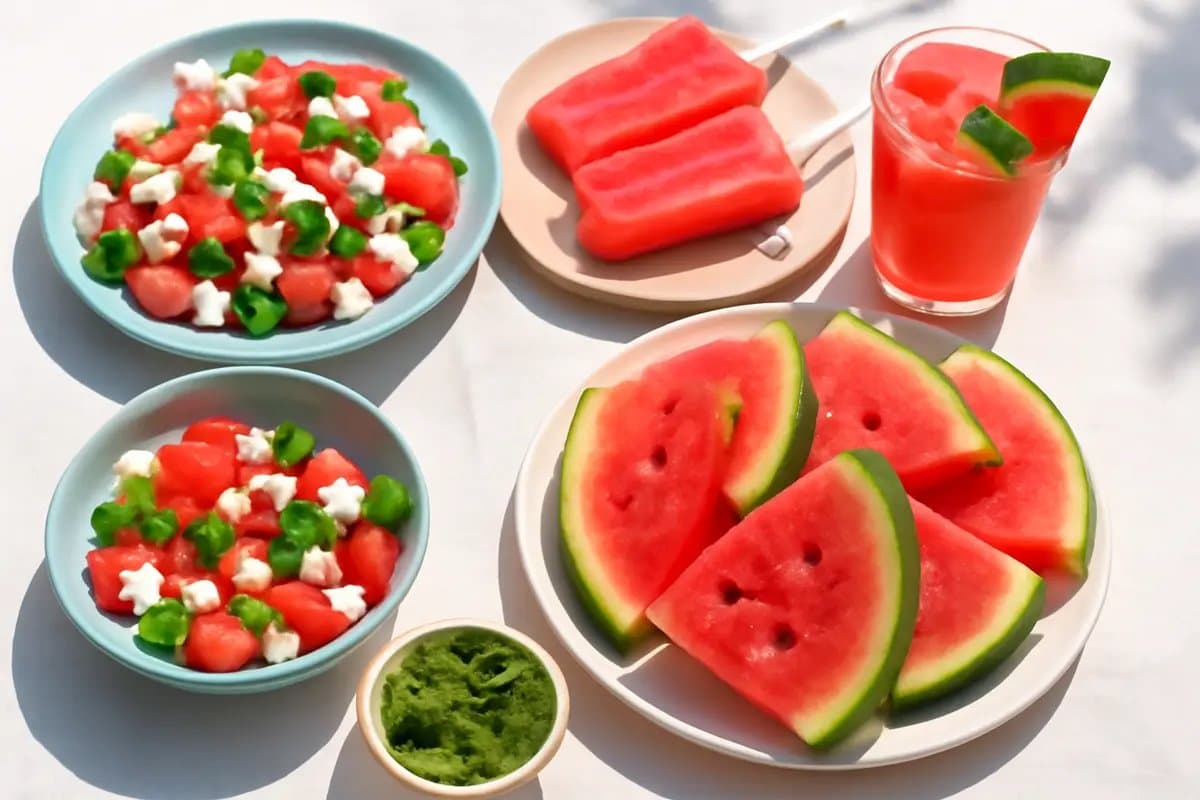
15 Refreshing Watermelon Recipes That Go Beyond Just Slicing
Watermelon is the star of Pinterest summer trends — from feta salad (+300%) to homemade sorbet (+200%) to creative drinks (+300%). Here are 15 ways to use it.
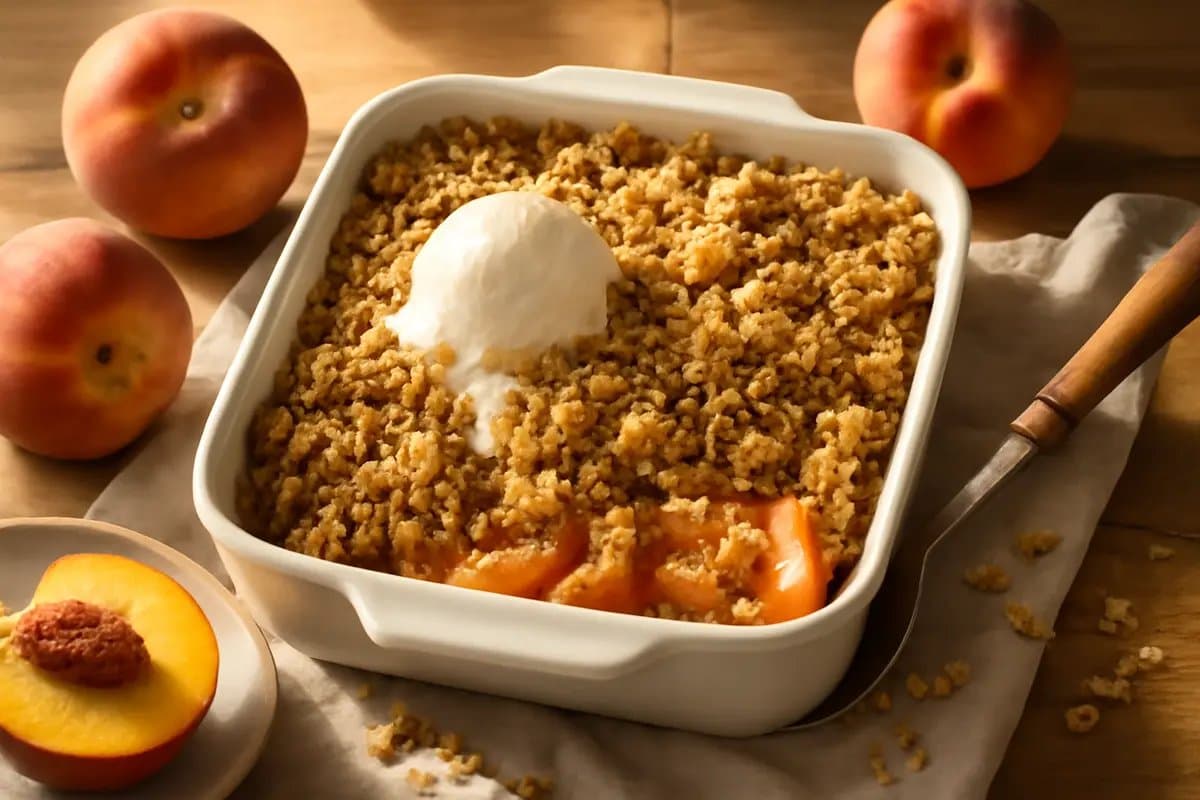
Peach Dessert Recipes: A Seasonal Guide to Summer's Sweetest Fruit
Peach dessert searches surged 200% on Pinterest. From peach crisp to cobblers to homemade ice cream — here's how to make the most of peach season.
Weekly recipes, zero spam.
Get the best recipes and cooking tips delivered to your inbox every week.